

Quick Answer:
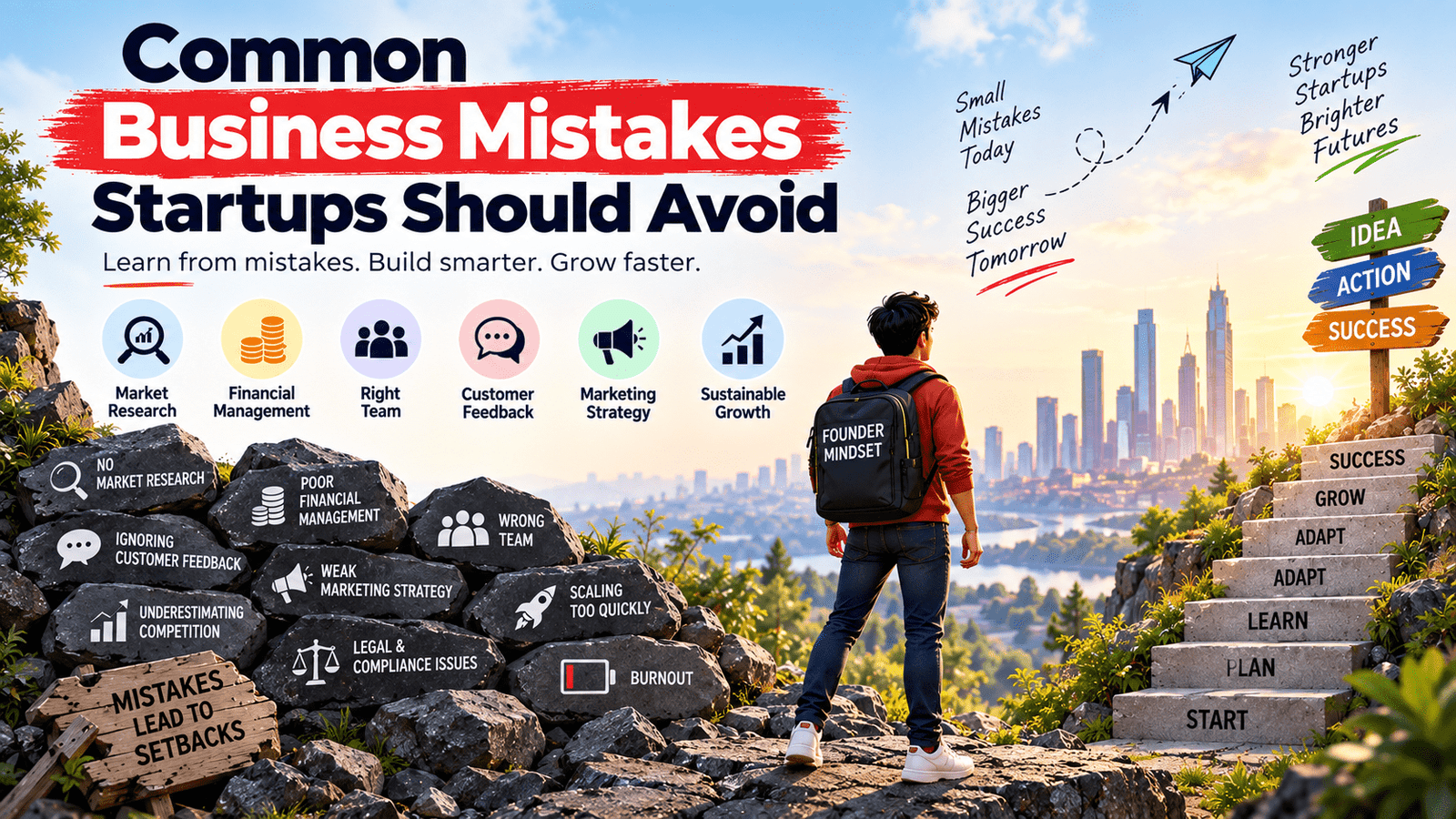
The article highlights the most common business mistakes startups should avoid, including skipping market research, poor financial management, hiring the wrong team, ignoring customer feedback, underestimating competition, weak marketing, premature scaling, and legal oversights. It emphasizes data-driven decisions, customer focus, financial discipline, adaptability, compliance, and sustainable growth as essential foundations for long-term startup success.
Introduction
Launching a startup is one of the most exciting and rewarding journeys an entrepreneur can take. The thrill of turning an idea into a real business is unlike anything else. However, the road to success is riddled with pitfalls that even the most passionate founders fall into.
Statistics paint a sobering picture. According to the U.S. Bureau of Labor Statistics, approximately 20% of startups fail within their first year, nearly 50% within five years, and about 65% within ten years. These numbers are not meant to discourage you — they are meant to prepare you.
The good news? Most startup failures are preventable. The majority of common business mistakes that cause startups to shut down are well-documented, well-studied, and most importantly — avoidable when you know what to look for.
In this comprehensive guide, we will walk you through the most critical business mistakes startups should avoid, explain why they happen, and give you actionable strategies to steer clear of them. Whether you are just starting out or already deep into building your company, this blog will serve as your roadmap to smarter decision-making.
Let's dive in.
Skipping Market Research
Why It Happens
Many startup founders are so passionate about their idea that they assume everyone else will love it too. This enthusiasm, while admirable, often leads to one of the most devastating startup mistakes — skipping thorough market research.
Why It Hurts
Without proper market research, you are essentially building your business on assumptions rather than data. You may invest thousands of dollars in a product that nobody actually wants or needs. According to CB Insights, 42% of startups fail because there is no market need for their product or service.
How to Avoid It
- Conduct surveys and interviews with your target audience before building your product.
- Analyze your competitors to understand market gaps and opportunities.
- Use tools like Google Trends, SEMrush, and Statista to validate demand.
- Build a Minimum Viable Product (MVP) to test the market before full-scale launch.
- Study industry reports and consumer behavior data regularly.
Pro Tip: Market research is not a one-time task. It should be an ongoing process as markets evolve and customer preferences shift.
Ignoring a Business Plan
Why It Happens
Entrepreneurs eager to launch quickly often skip the business planning phase, viewing it as a time-consuming formality. Some believe that having a great idea is enough to move forward.
Why It Hurts
A business plan is your startup's blueprint. Without it, you have no clear direction, no measurable goals, and no structured strategy. Investors also rarely fund startups that cannot present a solid business plan, which severely limits your access to capital.
How to Avoid It
- Create a detailed business plan that covers your mission, vision, target market, revenue model, marketing strategy, and financial projections.
- Use business plan templates from resources like SCORE, SBA, or LivePlan.
- Review and update your business plan quarterly as your startup evolves.
- Set SMART goals (Specific, Measurable, Achievable, Relevant, Time-bound) to keep your team aligned.
Poor Financial Management
Why It Happens
Many startup founders are great at their craft but lack financial literacy. Managing cash flow, tracking expenses, and planning for financial downturns are skills that are often neglected.
Why It Hurts
Poor financial management is one of the top reasons startups fail. Running out of cash — even when business is going well — can bring everything to a screeching halt. Overspending on non-essential items, failing to monitor burn rate, or underpricing products are all common financial pitfalls.
How to Avoid It
- Hire an experienced accountant or CFO early on, or use accounting software like QuickBooks, Xero, or FreshBooks.
- Separate personal and business finances immediately.
- Monitor your monthly burn rate and runway (how long your current cash will last).
- Build an emergency fund equivalent to at least 3–6 months of operating expenses.
- Price your products correctly — too low undervalues your offering; too high drives customers away.
- Seek funding before you desperately need it.
Remember: Cash flow is the lifeblood of any startup. A profitable business can still fail if it runs out of cash.
Hiring the Wrong Team
Why It Happens
In the early stages, startups often hire friends, family, or the first applicants available out of urgency or familiarity. Other times, founders try to do everything themselves to save money.
Why It Hurts
Your team is your startup's greatest asset. Hiring people who lack the necessary skills, share different values, or are not committed to the mission can create a toxic work culture, slow down growth, and cost you significantly more in the long run.
How to Avoid It
- Define the skills and culture fit you need before hiring.
- Take your time with the hiring process — never rush to fill a position.
- Use structured interviews and skills assessments to evaluate candidates objectively.
- Build a diverse team with complementary skills.
- Invest in onboarding and team development to retain top talent.
- Consider hiring freelancers or contractors for specialized roles before committing to full-time hires.
Key Insight: Hire for attitude and coachability as much as for skills. Skills can be taught; the right attitude is priceless.
Neglecting Customer Feedback
Why It Happens
Many startup founders fall in love with their product and resist feedback that suggests changes. Others are so focused on building and scaling that they forget to listen to the very people they are serving.
Why It Hurts
Ignoring customer feedback means you are continuously building something that may not align with what your customers actually want. This leads to low retention rates, poor reviews, and ultimately, business failure.
How to Avoid It
- Actively collect feedback through surveys, reviews, social media, and direct conversations.
- Use tools like Typeform, SurveyMonkey, or Google Forms to gather structured feedback.
- Create a feedback loop where customer insights directly influence your product development.
- Monitor reviews on platforms like Google, Yelp, Trustpilot, and G2.
- Practice active listening — thank customers for feedback and communicate what changes you are making.
Underestimating Competition
Why It Happens
Startups often believe their idea is so unique that they have no real competition. This overconfidence blinds them to existing alternatives in the market.
Why It Hurts
Every business has competition, whether direct or indirect. Underestimating competitors means you fail to differentiate your brand effectively, lose market share, and struggle to attract customers who have other options.
How to Avoid It
- Conduct a thorough competitive analysis using tools like SEMrush, SimilarWeb, and Ahrefs.
- Identify your Unique Value Proposition (UVP) — what makes you different and better.
- Monitor competitor strategies regularly, including their pricing, marketing, and product updates.
- Learn from competitor weaknesses and customer complaints to strengthen your offering.
- Stay informed about new entrants in your market.
Weak Online Presence and Marketing Strategy
Why It Happens
Many startups believe that simply having a great product will generate word-of-mouth referrals organically. They underinvest in marketing, especially digital marketing, resulting in poor visibility.
Why It Hurts
In today's digital-first world, if customers cannot find you online, you practically do not exist. A weak online presence means missed leads, lower brand awareness, and slower growth.
How to Avoid It
- Build a professional, SEO-optimized website from day one.
- Invest in content marketing — create valuable blogs, videos, and infographics that answer your audience's questions.
- Establish a strong presence on social media platforms relevant to your target audience.
- Use email marketing to nurture leads and retain customers.
- Invest in paid advertising (PPC) on platforms like Google and Meta for faster results.
- Track all marketing efforts using Google Analytics and social media insights.
SEO Tip: Consistently publishing keyword-optimized content is one of the most cost-effective long-term marketing strategies for startups.
Trying to Scale Too Quickly
Why It Happens
After early success, many founders feel pressure to grow as fast as possible — hiring aggressively, expanding to new markets, or launching multiple products simultaneously.
Why It Hurts
Scaling too quickly before your business model is validated and your systems are ready leads to operational chaos, cash burn, and quality decline. Many startups have collapsed under the weight of premature scaling.
How to Avoid It
- Validate your business model thoroughly before scaling.
- Ensure your operations, technology, and team can support growth.
- Scale one channel or market at a time to maintain quality and control.
- Use data and KPIs to determine when you are truly ready to scale.
- Maintain strong cash flow before expanding aggressively.
Failing to Adapt and Pivot
Why It Happens
Founders sometimes become so emotionally attached to their original idea that they refuse to change course even when market signals clearly suggest they should.
Why It Hurts
Markets change. Customer needs evolve. Technology disrupts industries overnight. Startups that fail to adapt and pivot when necessary risk becoming obsolete.
How to Avoid It
- Stay agile and open-minded about changing your approach.
- Regularly review your business metrics and market trends.
- Be willing to pivot your product, pricing, or target market based on real data.
- Study successful pivot stories like Slack, Instagram, and YouTube to understand how pivoting saved companies.
- Make decisions based on data, not ego.
Overlooking Legal and Compliance Issues
Why It Happens
Legal matters seem complex and expensive, leading many startups to put them off until later. Some founders do not even know which legal structures or regulations apply to them.
Why It Hurts
Ignoring legal requirements can result in lawsuits, hefty fines, intellectual property theft, and even forced closure. Legal mistakes are also incredibly expensive to fix after the fact.
How to Avoid It
- Register your business properly and choose the right legal structure (LLC, Corporation, etc.).
- Protect your intellectual property with trademarks, patents, or copyrights as applicable.
- Have contracts in place for all partnerships, employees, and clients.
- Understand data privacy laws relevant to your industry (GDPR, CCPA, etc.).
- Consult a startup attorney early — it is far cheaper to prevent legal problems than to solve them.
Burnout and Poor Work-Life Balance
Why It Happens
The startup culture glorifies hustle and long hours, leading founders to work relentlessly without taking time to rest, recharge, or delegate responsibilities.
Why It Hurts
Burnout impairs decision-making, kills creativity, damages relationships, and can destroy your physical and mental health. A burned-out founder cannot lead a thriving startup.
How to Avoid It
- Delegate tasks and trust your team to handle responsibilities.
- Schedule regular breaks, vacations, and downtime.
- Build healthy habits — exercise, sleep, and nutrition are non-negotiable.
- Seek mentorship and peer support through startup communities.
- Celebrate small wins to maintain motivation and morale.
Remember: Your startup needs you at your best. Taking care of yourself is not a luxury — it is a business strategy.
Conclusion
Building a successful startup is a marathon, not a sprint. The entrepreneurs who ultimately succeed are not necessarily those with the brightest ideas — they are the ones who learn quickly, make smart decisions, and avoid costly mistakes.
By understanding and actively avoiding these common business mistakes, you significantly improve your chances of building a startup that survives, thrives, and scales. Market research, financial discipline, the right team, customer focus, strong marketing, and legal compliance are not optional extras — they are foundational pillars of startup success.
Take these lessons seriously, implement them into your startup strategy, and most importantly — never stop learning. The business landscape is always changing, and the most resilient founders are those who evolve with it.
Your startup journey will have challenges. But with the right knowledge and mindset, you have everything you need to navigate those challenges and build something truly remarkable.
Good luck — and start smart.
FAQs
What are the most common reasons startups fail?
The most common reasons startups fail include lack of market need (42%), running out of cash (29%), having the wrong team (23%), strong competition (19%), and poor pricing strategies. The majority of these failures are preventable through careful planning, market research, financial management, and building the right team from the beginning.
How important is market research for a startup?
Market research is absolutely critical for any startup. It helps you validate whether there is genuine demand for your product or service, understand your target audience's pain points, and identify your competition. Skipping market research is one of the fastest ways to waste time and money building something nobody wants. Always validate your idea with real data before investing heavily in development.
How much money should a startup have in reserve?
Financial experts typically recommend that startups maintain an emergency fund equivalent to 3–6 months of operating expenses. This financial cushion helps you navigate slow months, unexpected costs, or market downturns without shutting down. Additionally, startups should always be aware of their burn rate (how much money they spend per month) and runway (how many months they can operate before running out of funds).
When is the right time to scale a startup?
The right time to scale is when your business model is proven and profitable, your systems and operations can handle increased demand, you have a strong and reliable team in place, and your cash flow is healthy enough to support growth. Scaling too early — before these elements are in place — is one of the most dangerous mistakes a startup can make. Use data and key performance indicators (KPIs) to make informed scaling decisions.
How can startups build a strong online presence on a limited budget?
Startups can build a strong online presence on a budget by focusing on content marketing and SEO (which generates long-term organic traffic), leveraging free or low-cost social media platforms, using email marketing tools like Mailchimp, creating a professional website with platforms like WordPress or Wix, and actively engaging in relevant online communities and forums. Consistency and quality content creation over time will significantly improve your online visibility without requiring a massive marketing budget.
Should startups hire employees or work with freelancers in the early stages?
In the early stages, a combination of both is often the smartest approach. Hire full-time employees for core, ongoing roles that are central to your business operations. Use freelancers or contractors for specialized, project-based work such as graphic design, web development, content writing, or legal consulting. This approach allows startups to access top talent while managing costs effectively. As your startup grows and revenue stabilizes, you can transition more freelance roles to full-time positions.