

Quick Answer:
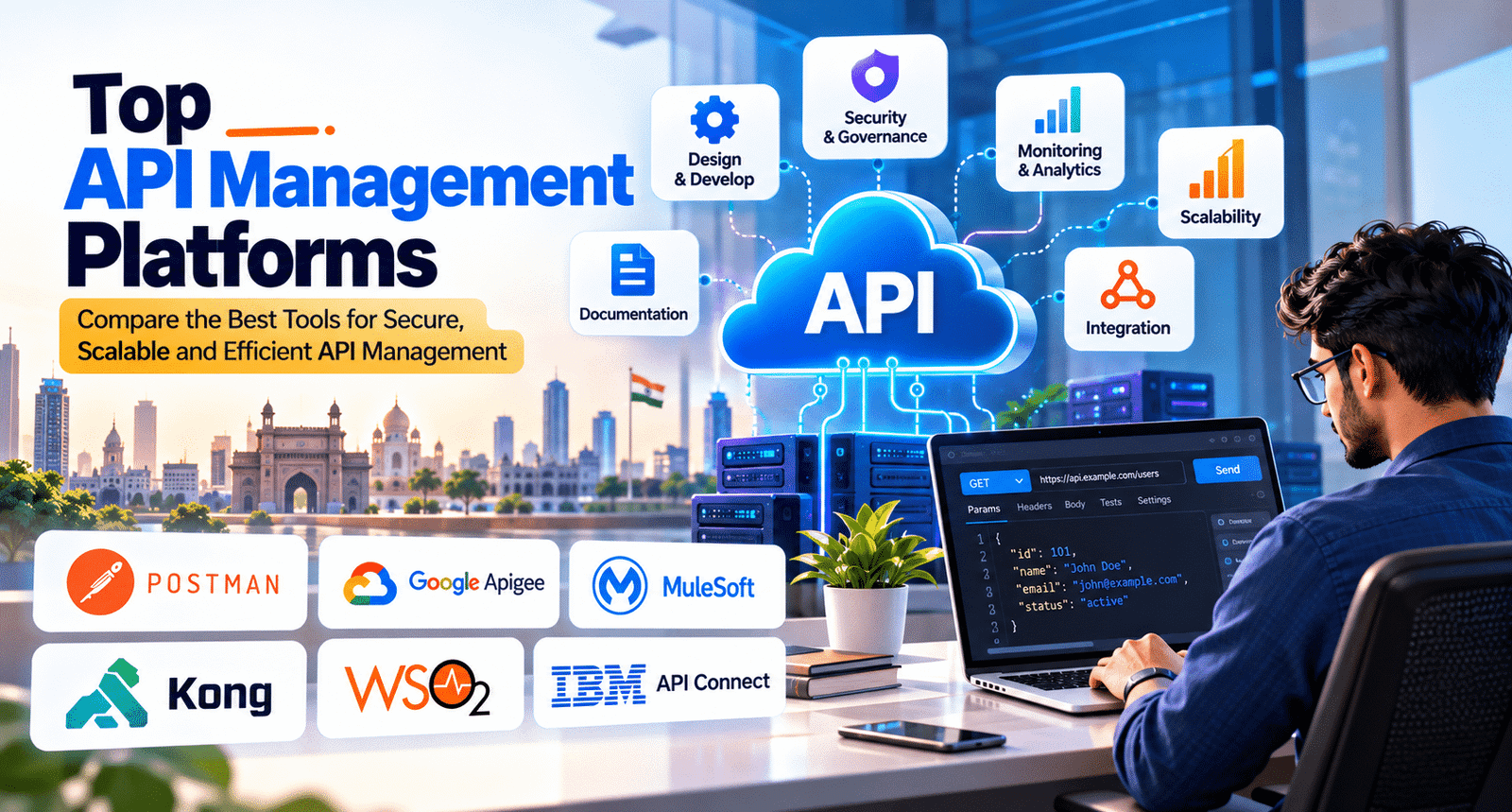
API management platforms help businesses design, secure, monitor, and scale APIs for seamless application integration. Leading options include Postman, Google Apigee, MuleSoft Anypoint, Kong, WSO2, and IBM API Connect. Postman and Kong suit startups, while Apigee, MuleSoft, and IBM API Connect support complex enterprise needs. The right platform depends on your budget, security requirements, scalability, integration needs, and deployment preferences.
Introduction
Modern businesses run on connected systems, and that connection happens through APIs. As companies in India scale their digital operations, the demand for reliable API management platforms has grown rapidly. These platforms help businesses design, secure, monitor, and scale their APIs without worrying about performance bottlenecks or security loopholes.
Whether you run an ecommerce brand, a fintech startup, or a large enterprise, choosing the right API management platform can directly impact how smoothly your applications communicate with each other. Many businesses search for these solutions because manual API handling becomes unmanageable as traffic and integrations increase.
In this guide, we have compared some of the most trusted names in this space. You will find details on pricing, ratings, technology stack, and services offered, so you can make an informed decision for your business.
Top 4 API Management Platforms at a Glance
| Company Name | Founded | Employee Size | Hourly Rate | Clutch Rating | Min. Project Price |
| Postman | 2014 | 500–1,000 | $100–$150/hr | 4.6/5 | $10,000+ |
| Google Apigee | 2004 | 500+ (division) | $120–$180/hr | 4.5/5 | $15,000+ |
| MuleSoft Anypoint | 2006 | 1,000+ | $130–$180/hr | 4.6/5 | $20,000+ |
| Kong Inc. | 2017 | 300–500 | $100–$160/hr | 4.5/5 | $12,000+ |
Top API Management Platforms
1. Postman
Postman started as a simple API testing tool and has grown into a full-fledged collaboration platform for API development. Teams across India use it to design, test, document, and monitor APIs within a single workspace. Its clean interface and strong community support make it a favourite among developers who want speed without complexity.
Services Provided: API design, testing, documentation, monitoring, mock servers
Technology Stack: REST, GraphQL, SOAP, OAuth 2.0, JavaScript
Hourly Rate: $100–$150/hr
Founded: 2014
Employee Size: 500–1000
Clutch Review: 4.6 / 5.0
Min. Project Price: $10,000+
Google Review: 4.5 / 5.0
Industries: IT, Ecommerce, SaaS, BFSI, Healthcare
2. Google Apigee
Apigee, now part of Google Cloud, is built for organizations that need enterprise-grade API security and analytics. It offers deep traffic insights and strong governance controls, which is why many large enterprises rely on it to manage high-volume API traffic. Businesses with complex integration needs often choose Apigee for its scalability and cloud-native architecture.
Services Provided: API gateway, analytics, security, monetization, developer portal
Technology Stack: Google Cloud, Kubernetes, Node.js, Java, OAuth
Hourly Rate: $120–$180/hr
Founded: 2004
Employee Size: 500+ (as part of Google Cloud division)
Clutch Review: 4.5 / 5.0
Min. Project Price: $15,000+
Google Review: 4.4 / 5.0
Industries: BFSI, Telecom, Retail, Government, Healthcare
3. MuleSoft Anypoint Platform
MuleSoft, acquired by Salesforce, focuses on connecting applications, data, and devices through a unified integration approach. Its Anypoint Platform is widely used by enterprises that want to unify legacy systems with modern applications. Many businesses prefer it when dealing with complex, multi-cloud environments.
Services Provided: API design, integration, data mapping, API management, monitoring
Technology Stack: Java, Mule ESB, Salesforce, Docker, Kubernetes
Hourly Rate: $130–$180/hr
Founded: 2006
Employee Size: 1000+
Clutch Review: 4.6 / 5.0
Min. Project Price: $20,000+
Google Review: 4.5 / 5.0
Industries: BFSI, Manufacturing, Retail, Healthcare, IT
4. Kong Inc.
Kong offers a lightweight, high-performance API gateway built for microservices and cloud-native applications. It is a strong choice for companies that prioritize speed and flexibility without heavy overhead. Startups and growing businesses often pick Kong because it is easy to deploy and integrates smoothly with existing DevOps pipelines.
Services Provided: API gateway, service mesh, security, rate limiting, analytics
Technology Stack: Kubernetes, Docker, Lua, Kong Gateway, OpenAPI
Hourly Rate: $100–$160/hr
Founded: 2017
Employee Size: 300–500
Clutch Review: 4.5 / 5.0
Min. Project Price: $12,000+
Google Review: 4.4 / 5.0
Industries: SaaS, Fintech, Ecommerce, IT Services
5. WSO2
WSO2 is known for its open-source approach to API management, giving businesses full control over customization and deployment. Companies that want flexibility without vendor lock-in often turn to WSO2, especially for hybrid or on-premise setups. Its strong developer community also makes troubleshooting and upgrades easier.
Services Provided: API management, identity and access management, integration
Technology Stack: Java, WSO2 Carbon, Ballerina, OAuth, SAML
Hourly Rate: $90–$140/hr
Founded: 2005
Employee Size: 700+
Clutch Review: 4.4 / 5.0
Min. Project Price: $8,000+
Google Review: 4.3 / 5.0
Industries: Government, BFSI, Telecom, Education
6. IBM API Connect
IBM API Connect brings enterprise reliability and strong security compliance to API management. It is often selected by large organizations that already rely on IBM infrastructure and want tight integration across their existing systems. Its governance and lifecycle management tools make it suitable for regulated industries.
Services Provided: API lifecycle management, security, analytics, developer portal
Technology Stack: IBM Cloud, Kubernetes, Node.js, OpenAPI
Hourly Rate: $110–$170/hr
Founded: 2016 (product launch)
Employee Size: 280,000+ (parent company)
Clutch Review: 4.3 / 5.0
Min. Project Price: $18,000+
Google Review: 4.2 / 5.0
Industries: BFSI, Healthcare, Government, Manufacturing
How to Choose the Right API Management Platforms
Picking the right fit depends on more than just features. Look at the company's experience, pricing structure, and client reviews before deciding. Good communication during onboarding matters just as much as technical expertise.
Also check how well the platform scales as your traffic grows. If you are comparing options after reading our guide to cloud computing platforms, you will notice that the best API management platforms balance security, flexibility, and ease of integration.
Key Benefits of Using API Management Platforms
Choosing the right API management platform brings real, measurable advantages to your business:
- Cost-effectiveness: Avoid building custom infrastructure from scratch
- Scalability: Handle growing traffic without performance drops
- Technical expertise: Access built-in security, analytics, and governance tools
- Faster delivery: Pre-built templates and gateways speed up development
- Long-term support: Regular updates and dedicated documentation
- Latest technologies: Stay aligned with microservices, cloud-native, and DevOps trends
For businesses exploring integrations alongside their tech stack, pairing the right platform with proven DevOps tools can further streamline deployment cycles.
Conclusion
Finding the right API management platform comes down to understanding your business needs, technical requirements, and long-term growth plans. From Postman's simplicity to MuleSoft's enterprise integration strength, each option on this list serves a different type of business.
If you are still unsure which API management platforms suit your project best, our team at TechTalksToday can guide you through the comparison process. We also recommend checking our list of top software development companies in India if you need implementation support.
Contact us today to discuss your requirements and find the right technology partner for your business goals.
FAQs
What is an API management platform used for?
An API management platform helps businesses design, secure, monitor, and scale their APIs. It simplifies how different applications communicate, reduces manual errors, and provides analytics to track performance and usage across systems.
Which API management platform is best for startups?
Postman and Kong are popular among startups due to their simple setup, affordable pricing, and strong developer communities. Both platforms offer flexibility without requiring heavy infrastructure investment, making them ideal for smaller teams.
How much does API management software cost in India?
Pricing varies based on features and scale. Smaller projects can start around $8,000, while enterprise-grade solutions like MuleSoft or Apigee may begin at $15,000 or more, depending on customization and support requirements.
Can API management platforms handle high traffic volumes?
Yes, most enterprise platforms like Apigee, MuleSoft, and IBM API Connect are built to manage large-scale traffic with features like load balancing, caching, and rate limiting to maintain performance during peak usage.
Is open-source API management reliable for businesses?
Open-source platforms like WSO2 offer strong reliability along with full customization control. They work well for businesses that want flexibility without vendor lock-in, though they may require more in-house technical expertise to manage.
How do I choose between cloud-based and on-premise API management?
It depends on your compliance needs and infrastructure. Cloud-based platforms offer easier scalability, while on-premise solutions suit businesses with strict data regulations, such as those in BFSI or government sectors.