

Quick Answer:
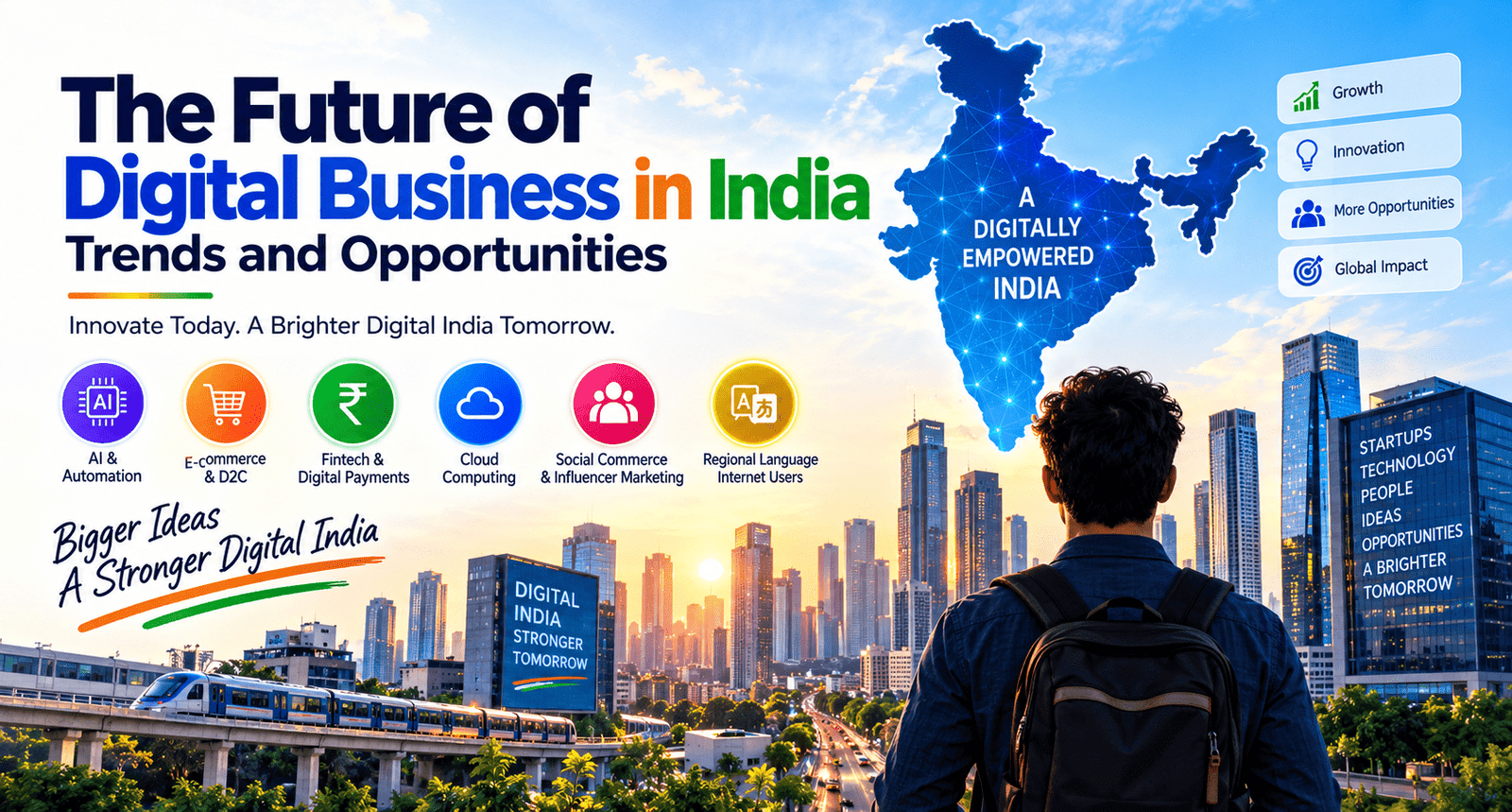
The article explores the future of digital business in India, highlighting AI and automation, e-commerce and D2C brands, fintech and UPI, cloud computing, social commerce, and regional-language content as major growth drivers. It also discusses opportunities in rural markets, healthtech, edtech, and agri-tech, while addressing challenges such as cybersecurity, regulations, competition, and digital literacy. Businesses can prepare by investing in technology, analytics, cybersecurity, and omnichannel strategies.
Introduction
India is undergoing a massive digital transformation. With over 900 million internet users, a thriving startup ecosystem, and government-backed initiatives like Digital India, the country is rapidly becoming a global hub for digital business innovation. From small entrepreneurs launching online stores to large enterprises adopting AI-driven solutions, the future of digital business in India looks incredibly promising.
In this blog, we'll explore the latest trends, opportunities, and challenges that will define India's digital business landscape in the coming years.
Why Digital Business Is Booming in India
Several factors are fueling the digital business boom in India:
- Affordable internet access through low-cost data plans
- Smartphone penetration reaching even rural areas
- Government initiatives like Digital India, Startup India, and UPI
- Young, tech-savvy population driving innovation and adoption
- Increased investor confidence in Indian startups and tech companies
This combination of infrastructure, policy support, and consumer readiness makes India one of the most attractive digital markets in the world.
Top Trends Shaping the Future of Digital Business in India
Rise of Artificial Intelligence and Automation
AI is no longer a futuristic concept—it's a business necessity. Indian companies are using AI for customer service (chatbots), predictive analytics, personalized marketing, and process automation. Small and medium businesses (SMEs) are also adopting AI tools to compete with larger players.
Growth of E-commerce and D2C Brands
E-commerce continues to expand beyond metro cities into tier 2 and tier 3 towns. Direct-to-Consumer (D2C) brands are thriving as businesses bypass traditional retail and sell directly to customers online, building stronger brand loyalty and higher margins.
Expansion of Fintech and Digital Payments
India's fintech sector is a global leader, driven by UPI, digital wallets, and Buy Now Pay Later (BNPL) services. This has made digital transactions accessible even in rural and semi-urban regions, fueling further digital business growth.
Increasing Adoption of Cloud Computing
Cloud technology allows businesses to scale efficiently, reduce infrastructure costs, and enable remote work. Indian startups and enterprises alike are migrating to cloud-based systems for better flexibility and data security.
Social Commerce and Influencer-Led Selling
Platforms like Instagram, YouTube, and WhatsApp are becoming powerful sales channels. Influencer marketing and social commerce are helping brands reach hyper-targeted audiences and drive conversions directly through social platforms.
Regional Language Internet Users
With millions of new internet users coming from non-English-speaking backgrounds, businesses are localizing content in regional languages to tap into this growing audience effectively.
Key Opportunities for Businesses in India's Digital Economy
- Untapped rural markets with rising internet penetration
- Digital-first startups in health tech, edtech, and agri-tech
- Export opportunities through cross-border e-commerce
- AI-powered personalization for enhanced customer experience
- Subscription-based business models gaining popularity
Businesses that identify and capitalize on these opportunities early will have a significant competitive advantage.
Challenges Businesses May Face
While the opportunities are vast, businesses must also navigate:
- Data privacy and cybersecurity concerns
- Digital literacy gaps in rural areas
- Intense market competition
- Evolving regulatory frameworks
- Logistics and last-mile delivery issues
Understanding these challenges is crucial for building a sustainable digital business strategy.
How Businesses Can Prepare for the Digital Future
- Invest in AI and automation tools to improve efficiency
- Build a strong omnichannel presence (website, social media, marketplaces)
- Focus on regional language content to reach wider audiences
- Prioritize cybersecurity and data protection
- Leverage data analytics for informed decision-making
- Stay updated with government policies and digital initiatives
Conclusion
The future of digital business in India is bright, driven by technological innovation, supportive government policies, and a rapidly growing digital consumer base. Businesses that embrace emerging trends like AI, fintech, and social commerce will be well-positioned to thrive in this evolving landscape. Now is the time for entrepreneurs and enterprises to invest in digital transformation and unlock India's immense online growth potential.
FAQs
What is the future of digital business in India?
The future of digital business in India looks highly promising, driven by AI adoption, fintech growth, increasing internet penetration, and strong government support through initiatives like Digital India.
Which sectors offer the most digital business opportunities in India?
E-commerce, fintech, edtech, healthtech, and agri-tech are among the top sectors offering significant digital business opportunities in India.
How is AI impacting digital business in India?
AI is helping businesses automate processes, enhance customer service through chatbots, and deliver personalized marketing, making operations more efficient and cost-effective.
Why is regional language content important for digital businesses in India?
A large portion of India's new internet users prefer content in their native language. Businesses that localize content can reach a wider, more engaged audience.
What role does fintech play in India's digital economy?
Fintech has revolutionized digital payments through UPI, digital wallets, and BNPL services, making financial transactions more accessible across urban and rural India.
What challenges do digital businesses face in India?
Common challenges include cybersecurity risks, digital literacy gaps, regulatory changes, intense competition, and logistics issues in remote areas.